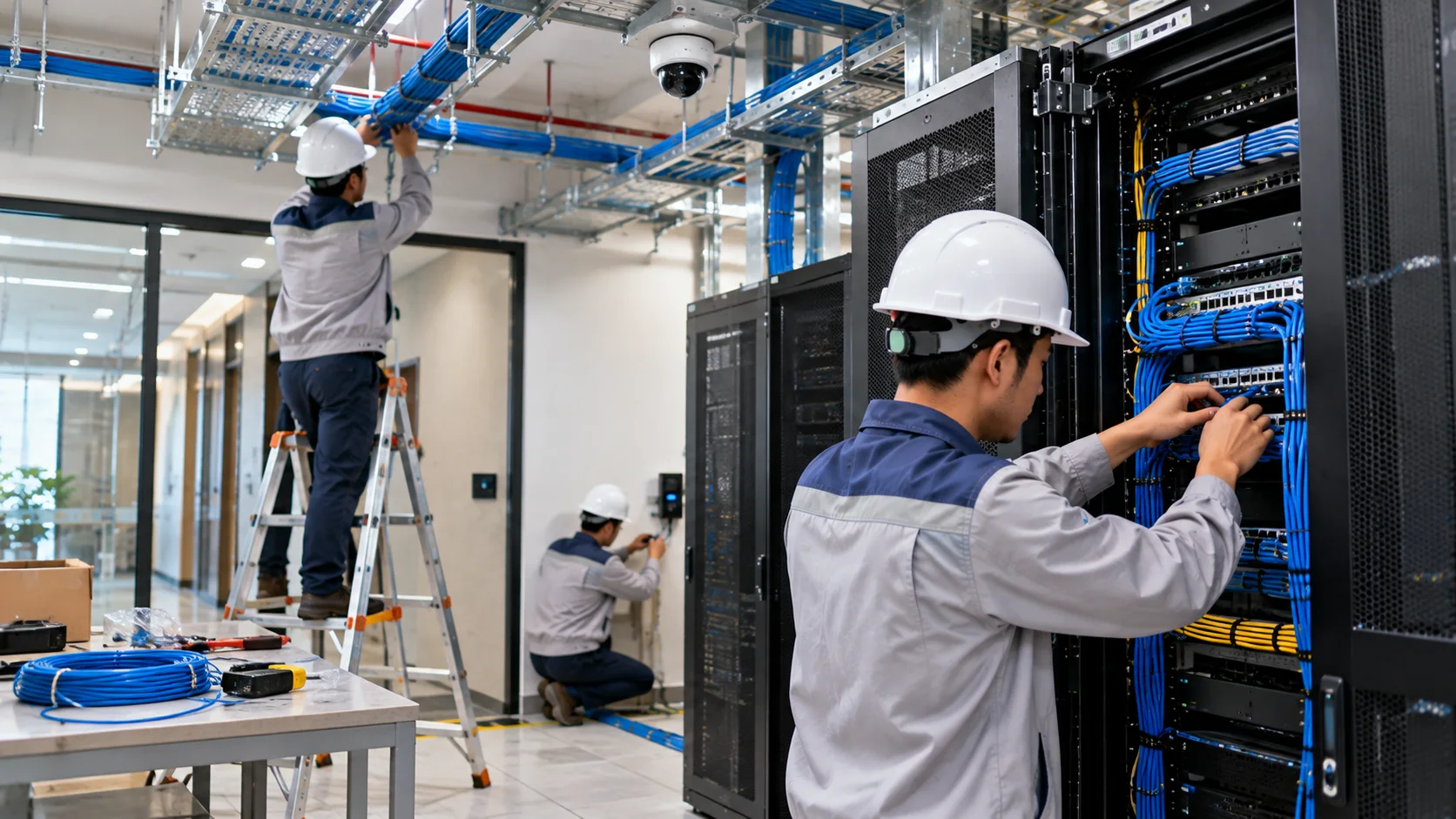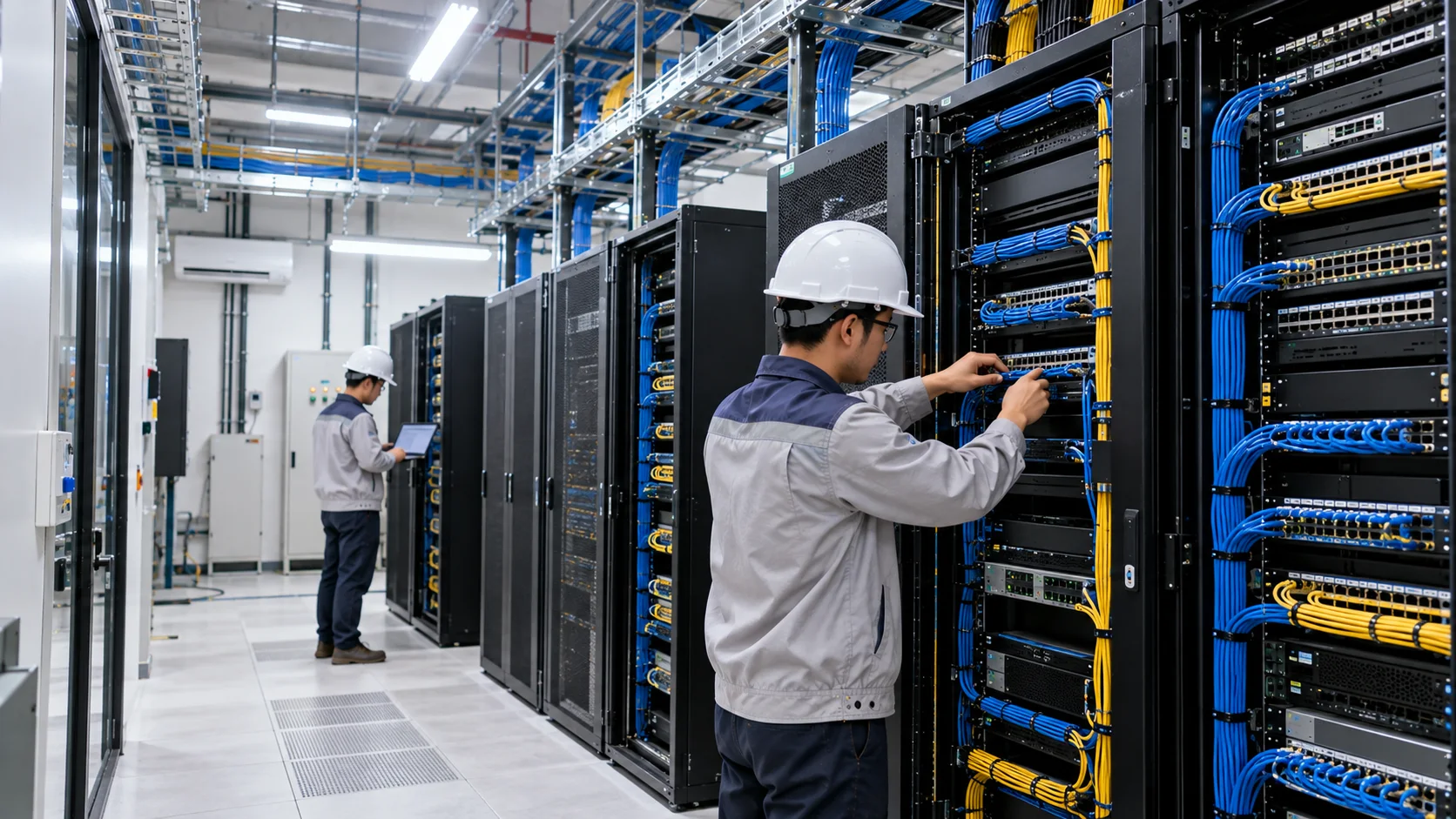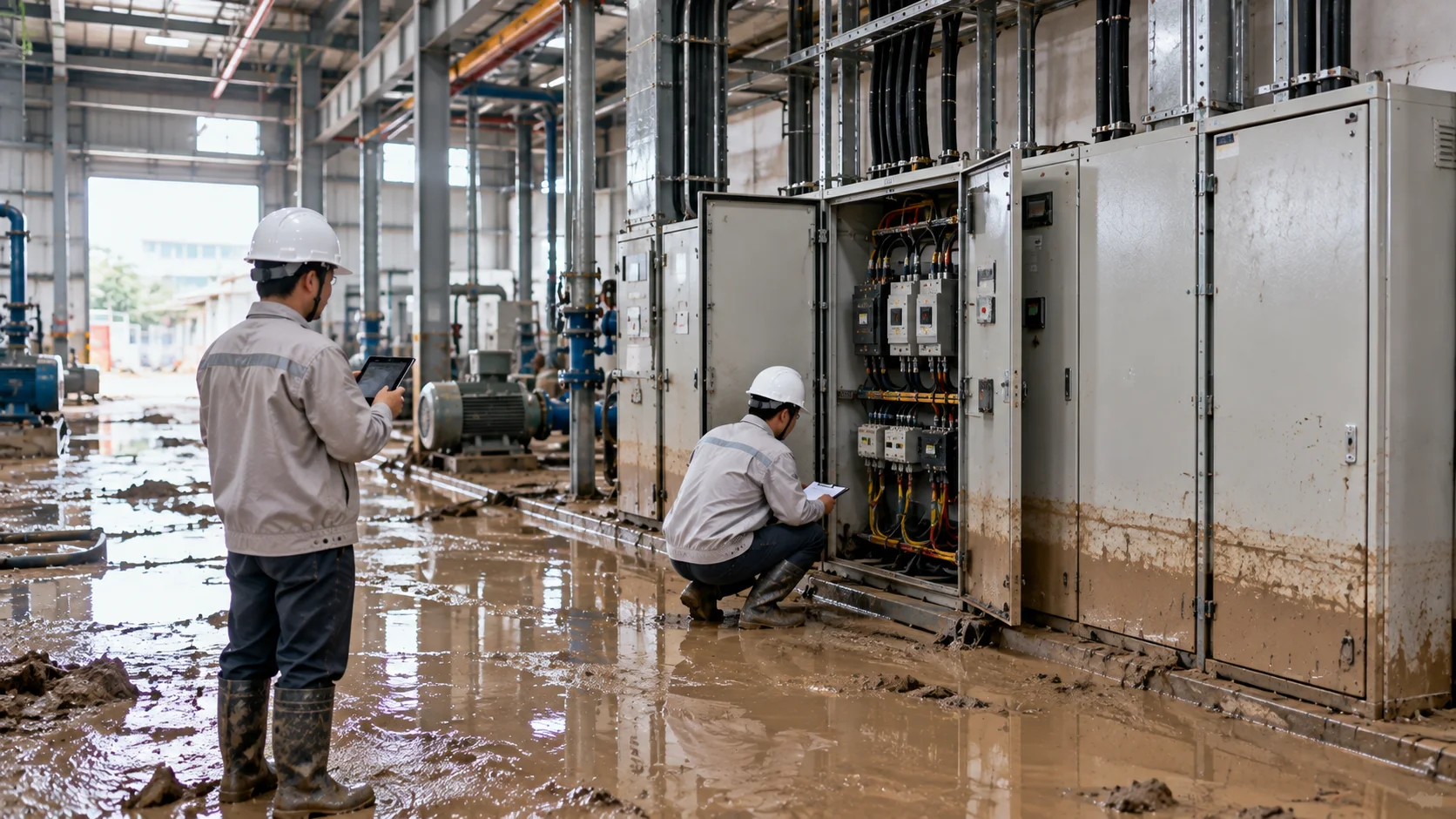


In Da Nang and across Central Vietnam, the heavy rain season usually peaks in October and November. Many factories in industrial parks are not flooded deeply, but a few tens of centimetres of water around the base of a switchboard is enough to cause trouble. Once the water drops, the first question is always the same: when can we switch back on?
The short answer: only after the checks are done, in the right order, and someone competent signs off. Re-energizing a damp system too early can destroy equipment that could have been saved, and it puts anyone near the panel at risk.
Before the water rises: isolate at the source
If a flood warning comes in, isolate at the main incomer or on the medium-voltage side (coordinate with the utility or the industrial park operator) rather than just switching off branch breakers. Note the time of isolation and, later, the highest water level. Photos of the water line on panels and walls are useful for damage assessment and insurance claims.
After the water recedes: order of checks
- Confirm isolation. Prove dead with a tester checked on a known source. Watch for back-feed from generators, UPS units, rooftop solar inverters and charged capacitor banks.
- Make the area safe. Pump out cable trenches, pits and basements before opening panels.
- Mark the flood line on each item. Equipment below the line is treated very differently from equipment above it.
- Clean and dry. Remove silt, clean residue using methods the manufacturer allows, and dry with warm air or heaters without overheating insulation.
- Test insulation resistance. Phase-to-phase and phase-to-earth on cables, busbars and motors. Record results and compare with earlier readings and manufacturer criteria. This is work for qualified personnel.
- Check the earthing system. Electrodes can be scoured and joints corroded. Re-measure earth resistance before energizing.
- Re-energize level by level. Main board first, observe, then each distribution board and branch. Never close everything at once.
Replace rather than dry
Contaminated water gets into places that cannot be properly cleaned. Industry guidance on water-damaged electrical equipment (for example NEMA's published guide) recommends replacing most of the following if they were submerged:
- Moulded-case and miniature circuit breakers, residual current devices.
- Variable speed drives, soft starters, PLCs, power supplies, electronic relays and multifunction meters.
- Sockets, switches, luminaires and lighting controls.
- Cable terminations that sat in water, especially cables not rated for wet conditions.
Larger items such as dry-type transformers, large motors and MV switchgear need assessment by the manufacturer or a testing specialist. Some can be reconditioned, some cannot.
Commonly missed items
- Pump and fan control panels, often mounted low next to sumps.
- Fire alarm and fire pump panels, which must be back in service early but still need full checks.
- Rooftop solar inverters: modules keep generating in daylight even when the AC board below is flooded. Isolate the DC side.
- ELV systems: CCTV, access control and network switches in ground-floor rooms.
Keep a record
After each flood, log the peak water level, affected equipment, insulation test results and replaced items. This record helps decide whether to raise panel plinths or relocate control panels, and feeds directly into next year's M&E maintenance plan.
If your facility in Da Nang or nearby provinces has been flooded and needs an inspection before power is restored, BILOCO's electrical team can carry out a site survey. Contact details are at the bottom of the page.
Frequently asked questions
If a flood warning comes in, isolate at the main incomer or on the medium-voltage side (coordinate with the utility or the industrial park operator) rather than just switching off branch breakers. Note the time of isolation and, later, the highest water level. Photos of the water line on panels and walls are useful for damage assessment and insurance claims.
- Confirm isolation. Prove dead with a tester checked on a known source. Watch for back-feed from generators, UPS units, rooftop solar inverters and charged capacitor banks.
- Make the area safe. Pump out cable trenches, pits and basements before opening panels.
- Mark the flood line on each item. Equipment below the line is treated very differently from equipment above it.
- Clean and dry. Remove silt, clean residue using methods the manufacturer allows, and dry with warm air or heaters without overheating insulation.
- Test insulation resistance. Phase-to-phase and phase-to-earth on cables, busbars and motors. Record results and compare with earlier readings and manufacturer criteria. This is work for qualified personnel.
- Check the earthing system. Electrodes can be scoured and joints corroded. Re-measure earth resistance before energizing.
…
Contaminated water gets into places that cannot be properly cleaned. Industry guidance on water-damaged electrical equipment (for example NEMA's published guide) recommends replacing most of the following if they were submerged:
- Moulded-case and miniature circuit breakers, residual current devices.
- Variable speed drives, soft starters, PLCs, power supplies, electronic relays and multifunction meters.
- Sockets, switches, luminaires and lighting controls.
- Cable terminations that sat in water, especially cables not rated for wet conditions.
Larger items such as dry-type transformers, large motors and MV switchgear need assessment by the manufacturer or a testing specialist. Some can be reconditioned, some cannot.
- Pump and fan control panels, often mounted low next to sumps.
- Fire alarm and fire pump panels, which must be back in service early but still need full checks.
- Rooftop solar inverters: modules keep generating in daylight even when the AC board below is flooded. Isolate the DC side.
- ELV systems: CCTV, access control and network switches in ground-floor rooms.
After each flood, log the peak water level, affected equipment, insulation test results and replaced items. This record helps decide whether to raise panel plinths or relocate control panels, and feeds directly into next year's M&E maintenance plan.
If your facility in Da Nang or nearby provinces has been flooded and needs an inspection before power is restored, BILOCO's electrical team can carry out a site survey…