


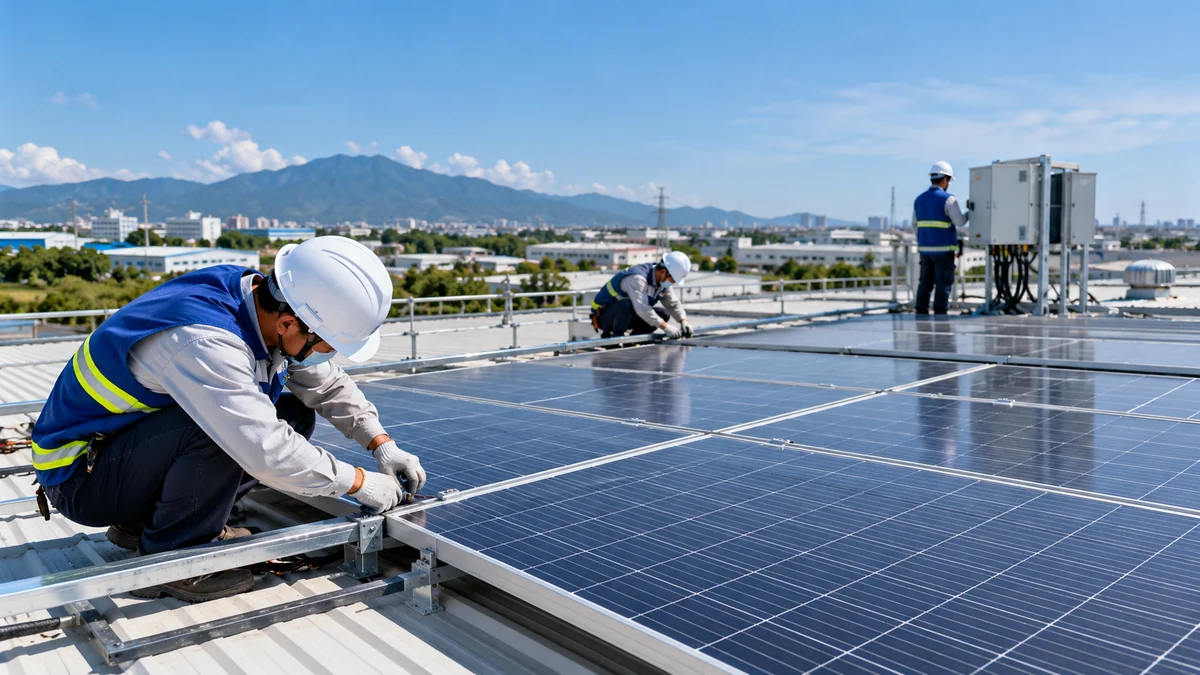
Available roof area is only one part of a rooftop solar proposal. Structural loading, daytime electricity demand, shading and the cable route to the electrical room must all be reviewed before selecting a system capacity.
BILOCO's project photo archive includes PV modules, inverters and rooftop installation activities. The service scope covers site assessment, system configuration, DC/AC installation and safety checks appropriate to each project.
Roof assessment and electricity use
The survey considers roof structure, covering materials, usable area, shading, sun exposure, safe access and waterproofing condition. Routes from the array to electrical rooms should be studied before installation.
Electricity bills and, where available, daytime load profiles help estimate self-consumption. Factories with shifts, schools and hotels can have very different demand patterns; a universal savings percentage would be misleading.
PV modules, inverters and energy strategy
A typical configuration may include PV modules, mounting structures, DC cabling, an inverter, AC/DC protective devices, earthing and monitoring. Final product selection depends on the approved engineering design and site conditions.
Grid-connected self-use, battery-assisted and special-use configurations operate differently. Storage should be considered where backup or load-shifting requirements justify separate technical, safety and cost assessment.
Rooftop installation and electrical protection
Rooftop work requires fall protection, protection of the roof covering and carefully designed mounting details. Module spacing, access routes and earthing arrangements should follow coordinated drawings.
PV DC circuits may remain energised in daylight. Cable routing, connectors, isolators, overcurrent devices, surge protection and warning information need proper engineering treatment; opening an AC breaker alone does not make all PV circuits safe.
Grid interface, checks and monitoring
Before operation, commissioning may include polarity and continuity checks, inverter configuration review, protective device checks, connection verification and monitoring tests under the agreed design procedure.
Grid connection, metering and export arrangements depend on applicable regulations and relevant approvals. The proposal does not assume that surplus energy can be sold or that any fixed yield is guaranteed.
Solar-specific maintenance
Monitoring should consider weather, building consumption and equipment state. Reduced production may result from soiling, shading, disconnections, inverter alarms or operational changes.
Maintenance may cover visual checks of modules, supports, connectors, electrical enclosures and earthing, together with appropriate cleaning. Work-at-height and PV DC hazards require specific safety arrangements.
Preparing a rooftop PV site assessment
A credible proposal begins with roof photographs, available structural information, roof type and electricity consumption records. Interval load data, where available, is particularly helpful for assessing self-consumption.
- Usable roof area, waterproofing condition, shade exposure and orientation.
- Electrical room location, connection drawings and relevant transformer capacity.
- Self-use, storage or backup objectives and investment constraints.
Generation and financial outcomes require project-specific calculation. Grid connection and any export arrangements remain subject to applicable rules and approvals.
Frequently asked questions
The survey considers roof structure, covering materials, usable area, shading, sun exposure, safe access and waterproofing condition. Routes from the array to electrical rooms should be studied before installation.
Electricity bills and, where available, daytime load profiles help estimate self-consumption. Factories with shifts, schools and hotels can have very different demand patterns; a universal savings perce…
A typical configuration may include PV modules, mounting structures, DC cabling, an inverter, AC/DC protective devices, earthing and monitoring. Final product selection depends on the approved engineering design and site conditions.
Grid-connected self-use, battery-assisted and special-use configurations operate differently. Storage should be considered where backup or load-shifting requirements justify separate t…
Rooftop work requires fall protection, protection of the roof covering and carefully designed mounting details. Module spacing, access routes and earthing arrangements should follow coordinated drawings.
PV DC circuits may remain energised in daylight. Cable routing, connectors, isolators, overcurrent devices, surge protection and warning information need proper engineering treatment; opening an AC breaker alone d…
Before operation, commissioning may include polarity and continuity checks, inverter configuration review, protective device checks, connection verification and monitoring tests under the agreed design procedure.
Grid connection, metering and export arrangements depend on applicable regulations and relevant approvals. The proposal does not assume that surplus energy can be sold or that any fixed yield is guaranteed.
Monitoring should consider weather, building consumption and equipment state. Reduced production may result from soiling, shading, disconnections, inverter alarms or operational changes.
Maintenance may cover visual checks of modules, supports, connectors, electrical enclosures and earthing, together with appropriate cleaning. Work-at-height and PV DC hazards require specific safety arrangements.